Affiliate Marketing: The Practical Guide I Wish I Had on Day One
Summary
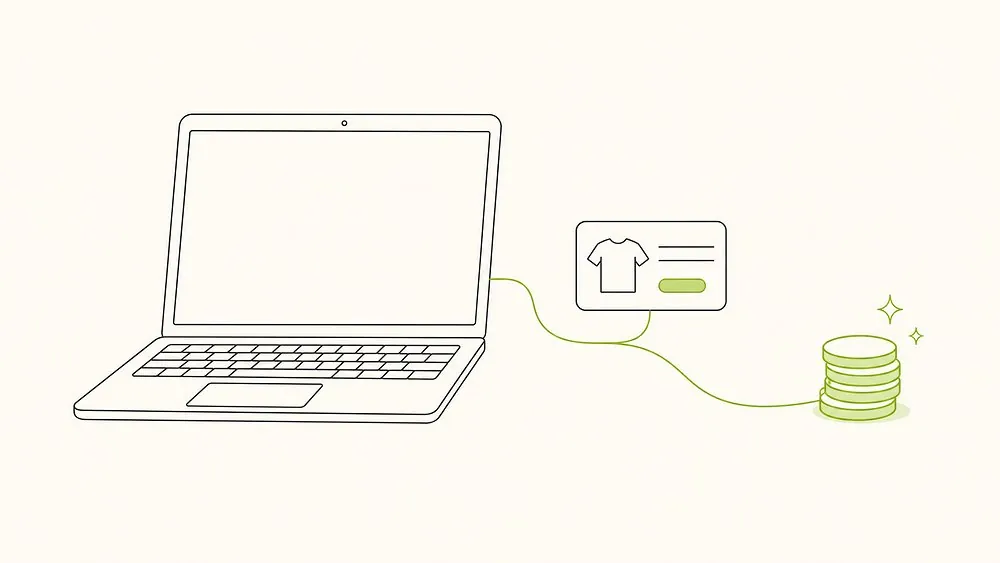
Affiliate marketing is getting paid a commission for driving a sale you didn’t have to fulfil. You send a qualified buyer to someone else’s product through a trackable link; when they buy, you earn.
The people who make real money at it don’t “post links.” They build an audience or a traffic system, earn trust, recommend things they’d stake their name on, and treat it like a business with numbers — not a side hustle with hope.
This guide covers how it actually works, the exact model I use to pick offers, a step-by-step way to start with zero audience, the mistakes that cost me money, and a checklist you can act on today.
The problem
Most people who try affiliate marketing quit within 90 days. Not because it doesn’t work — it’s a large, fast-growing industry for a reason — but because they were sold the wrong version of it.
The wrong version says: grab a link, spray it across WhatsApp and Instagram, wait for passive income. That version fails because it skips the only two things that actually produce commissions — trust and traffic.
The right version is boring and it compounds: pick a niche, build one channel that reliably reaches buyers, recommend products you genuinely understand, and measure everything. This guide is the boring version. It’s the one that pays.
Background: how affiliate marketing actually works
There are four players in every affiliate transaction:
-
The merchant — the company that owns the product (an e-commerce brand, a SaaS tool, a course creator).
-
The affiliate — you. You recommend the product.
-
The network or platform — the tech layer that tracks clicks and sales and handles payouts (Amazon Associates, Impact, CJ, Cuelinks or vCommission in India, or a brand’s in-house program).
-
The customer — the person who clicks your link and buys.
The mechanics:
-
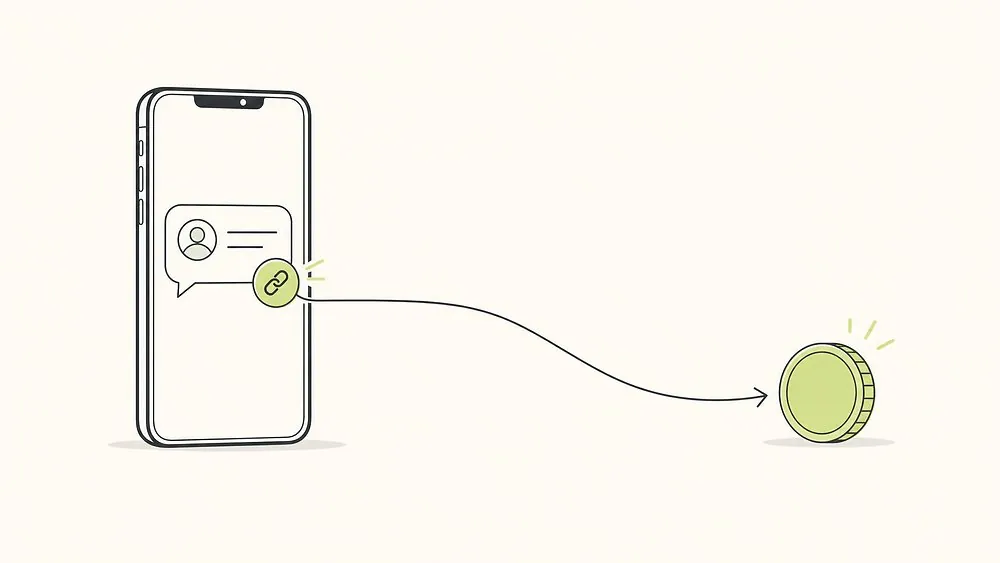
You get a unique tracking link with your affiliate ID.
-
A customer clicks it. A cookie is dropped on their device with an attribution window (for example, 24 hours on Amazon, 30–90 days on many SaaS programs).
-
If they buy within that window, the sale is attributed to you.
-
You earn a commission — a percentage of the sale (physical goods are often 1–10%) or a flat bounty (SaaS and finance can be much higher per sale).
Commission models you’ll encounter:
-
CPS (cost per sale) — paid when a purchase happens. Common in e-commerce and courses.
-
CPL (cost per lead) — paid for a qualified signup or form. Common in finance, insurance and B2B.
-
CPI (cost per install) — paid for an app install. Common in mobile apps.
-
Recurring — paid every month the customer stays. Common in SaaS and subscriptions.
The single most important concept: recurring and high-ticket beats high-volume-low-value for almost everyone. One recurring SaaS sale can out-earn hundreds of tiny physical-product commissions — and take less traffic to get there.
The framework: the Offer × Traffic × Trust model
Every affiliate income stream is three variables multiplied together. Weak in any one, weak overall.
Income ≈ Offer quality × Traffic quality × Trust
1. Offer — would I recommend this to my own family? Pick offers where the product is genuinely good, the commission justifies the effort, the attribution window is fair, and the payout is reliable. Score every offer on relevance, payout size, recurrence, and the conversion rate of the merchant’s page. A great product with a terrible landing page still won’t convert — you’re borrowing their checkout.
2. Traffic — do I reach people at the moment they’re deciding? The best affiliate traffic has buying intent. From highest to lowest intent:
-
Search (“best CRM for small business”) — highest intent, best ROI, compounds.
-
YouTube reviews and comparisons — high intent, high trust.
-
Email list — you own it, converts best.
-
Social content — volume, lower intent.
-
Paid ads — fast, but you’re buying margin; only works with strong economics.
3. Trust — do they believe me? Trust is why the same link converts far better from a respected reviewer than from a stranger. You build it by being useful before you sell, disclosing affiliate relationships openly, and only recommending what you’ve used or vetted. Trust is the moat competitors can’t copy.
How to use the model: don’t start by picking a product. Start by picking a niche where you can build trust and reach intent-driven traffic — then find the best offer in it.
Examples: three models that actually work
I’ve watched these three models play out again and again. None of them rely on a secret tactic — they’re about picking the right game.
Model 1 — Content + SEO (the compounding play). A single well-researched “best [X] for [use case]” article that ranks in search can keep earning commissions for years after you publish it, with almost no ongoing cost. This is the model I trust most, because the work compounds — last year’s article still pays this year. If you’re starting with more time than money, this is where I’d tell you to begin.
Model 2 — High-ticket / recurring (the leverage play). Instead of chasing hundreds of tiny e-commerce commissions, you focus on a few products that pay well — especially SaaS tools with recurring commissions. Here’s the shape of why it works: refer a handful of customers to a tool that pays you a recurring cut, and that income repeats every month and grows as you add more — while a physical-product affiliate has to earn every sale again from scratch. Same effort, very different ceiling. (That’s the logic, not a promise — real results depend entirely on your niche and traffic.)
Model 3 — Paid media (the fast-but-tight play). You buy traffic and send it to a review or bridge page for an offer. It’s the fastest to scale and the fastest to lose money on. This is where a performance-marketing instinct matters most: it only works when the unit economics are proven first — what a click costs you versus what a conversion pays back. Beginners almost always run this before they’re ready, and the market quietly takes their money. Earn the right to run paid traffic by proving the funnel converts for free first.
Mistakes I learned from
These are the lessons that shaped how I work now. I’m sharing the principle, not the paperwork — but each one cost me something to learn.
-
Promoting for the commission, not the customer. The most tempting trap is pushing whatever pays the most, regardless of whether it’s actually good. It works once. Then the refunds, the silence, and the lost trust show up — and trust is the entire asset. My filter now is simple: would I recommend this to a friend who trusted me? If not, I pass, no matter the payout.
-
Chasing volume over intent. Early on I optimised for clicks and traffic numbers because they felt like progress. They’re not. Clicks don’t pay; qualified buyers do. A hundred people actively deciding what to buy are worth more than ten thousand who are just curious.
-
Ignoring the merchant’s conversion rate. You’re borrowing someone else’s checkout. I’ve sent genuinely good traffic to a weak landing page, watched it die, and blamed the traffic. Now I check that the merchant’s page actually converts before I send it real volume.
-
Not owning my audience. Anything you build on a platform, the platform can take away the day it changes its rules. The lesson I wish I’d acted on sooner: build an email list from day one. It’s the one audience no algorithm can switch off.
-
No tracking. If you can’t see which piece of content, link, or source drives an actual sale, you’re guessing. Set up tracking before you scale anything — especially before you spend.
-
Diversifying too early. Five half-built channels earn less than one finished one. I spread myself thin chasing every shiny format before finishing the first. Win one channel completely, then expand.
Step-by-step: how to start with zero audience
-
Pick a niche you can be useful in. The intersection of what you know, where there are buyers, and where products pay commissions.
-
Pick one traffic channel. Best for beginners with no budget: SEO content (a simple blog) or YouTube. Both build trust and compound. Choose the format you’ll actually keep doing for 12 months.
-
Find 3–5 offers before you write a word. Join relevant programs. Check commission, recurrence, cookie window and payout threshold — and, critically, whether the product is genuinely good. Prioritise recurring and high-ticket.
-
Create buyer-intent content. The formats that convert: “best [X] for [use case]”, “[product] review”, “[product A] vs [product B]”, “how to [outcome] with [product]”. Be honest — include downsides. Honesty converts better than hype.
-
Add your links naturally and disclose. Place links where the reader is deciding. Add a clear disclosure — it’s legally required in many regions and it builds trust rather than reducing it.
-
Build an email list in parallel. Offer a simple lead magnet such as a checklist or template. Every visitor you capture is an asset you own and can recommend to repeatedly.
-
Track, then double down. Use sub-IDs and analytics to see what drives sales. Kill what doesn’t; do more of what does.
-
Only then consider paid traffic. Once you have one proven converting page and know your numbers, paid can pour fuel on the fire. Not before.
Checklist
Copy this before you launch anything.
-
Niche chosen at the intersection of knowledge + buyers + commissions.
-
One traffic channel chosen — and I’ll commit to it for 12 months.
-
3–5 affiliate offers vetted for quality, payout, recurrence, cookie window and payout threshold.
-
Verified the merchant’s landing page actually converts.
-
First three buyer-intent pieces planned (“best”, “review”, “vs”).
-
Affiliate disclosure written and placed.
-
Email capture + lead magnet live.
-
Tracking set up (sub-IDs + analytics) before any spend.
-
One number I’m optimising for (for example, commission per 1,000 visitors).
Resources
-
Networks to know: Amazon Associates, Impact, CJ Affiliate, PartnerStack (SaaS); and in India, Cuelinks, vCommission and EarnKaro.
-
Tools worth knowing: Google Analytics for tracking, a link-management or cloaking tool, and a simple offer-scoring spreadsheet. Keep the stack minimal until volume justifies more.
-
Free template (coming soon): an offer-scoring spreadsheet you can copy — this will live in the site’s Downloads section as a lead magnet.
FAQs
Is affiliate marketing still worth it?
Yes — but the easy version is dead. Trust-based, intent-driven affiliate marketing is bigger than ever because buyers research before they buy. Link-spamming is what’s dead.
How much can a beginner realistically earn?
For the first few months, often near zero — you’re building the asset before it pays. A realistic shape is: your first small commissions somewhere around month three to six, and meaningful, repeatable income by roughly month nine to twelve if you stay focused on one channel. Anyone promising fast passive income is selling you the dream, not the reality.
Do I need a website?
No, but it helps. YouTube, email, or even a strong social presence can work. A website (SEO) is the most durable because it compounds and you own it.
How much money do I need to start?
You can start with almost nothing using content, SEO or YouTube — just time. Paid-traffic affiliate marketing needs a budget and proven unit economics first.
Do I have to disclose affiliate links?
Yes. You’re generally required to disclose affiliate relationships (FTC in the US, ASCI guidance in India). Disclosure also builds trust — always do it.
Affiliate marketing vs dropshipping — which is better?
Affiliate marketing means no inventory, no fulfilment and no support — you trade higher control for lower operational headache. Dropshipping gives more control and margin but you own fulfilment and support. Affiliate is the lower-risk entry point.
Key takeaways
-
Affiliate marketing = a commission for driving a sale you don’t have to fulfil.
-
Income = Offer quality × Traffic quality × Trust. Weak in one, weak overall.
-
Recurring and high-ticket beat high-volume-low-value for almost everyone.
-
Buyer intent is the highest-leverage traffic — SEO and reviews compound.
-
Own your audience (email). Track everything. Win one channel before expanding.
-
The boring, trust-first version is the one that actually pays.
Related reading (coming soon): SEO for beginners, building an email list from zero, and performance marketing fundamentals — I’ll link them here as they publish.